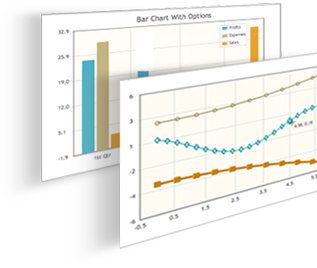
EditableGrid, make your HTML tables editable

EditableGrid is an open source JavaScript library aimed at turning tables into fully editable components. Its API is focused on simplicity : only a few lines of code are necessary to get your first editable grid up and running.

Originally, EditableGrid was a component developed for T:metrack, our über timesheet and invoicing tool. Thereafter, we decided to factorize it into an external library. We think that this tool can be useful in other web projects. This is why we chose to publish it under a free license. We use Open Source software everyday and we wanted to offer our small contribution. If you use EditableGrid, feel free to tell us. The best motivation is to know that our work is used and appreciated. 

Sigma Ajax Grid


Written in pure javascript, Sigma grid is an open source AJAX data grid for displaying and inline editing data in a scrollable and sortable table. It is very powerful yet  easy to use &  integrate with php, asp.net, jsp and RoR.

Animated Sortable Data Table jQuery plugin - jTPS

jTPS is a datatable jQuery plugin that offers pagination, animated scrolling through pages and intelligent natural sorting capability. The development version is currently 15KB

tablesorter


tablesorter is a jQuery plugin for turning a standard HTML table with THEAD and TBODY tags into a sortable table without page refreshes. tablesorter can successfully parse and sort many types of data including linked data in a cell. It has many useful features including:

Multi-column sorting
Parsers for sorting text, URIs, integers, currency, floats, IP addresses, dates (ISO, long and short formats), time. Add your own easily Support secondary "hidden" sorting (e.g., maintain alphabetical sort when sorting on other criteria)
Extensibility via widget system
Cross-browser: IE 6.0+, FF 2+, Safari 2.0+, Opera 9.0+
Small code size

MyTableGrid 

MyTableGrid is a JavaScript based DataGrid control built on the Prototype library. It allows you to display your data in a simple and flexible way.


http://www.hotscripts.com/blog/15-javascript-data-grids-enhance-html-tables/ )

Posted by 솔라리스™
:

A set of assertion methods useful for writing tests. Only failed assertions are recorded. These methods can be used directly: Assert.assertEquals(...), however, they read better if they are referenced through static import:

 import static org.junit.Assert.*;

    ...

    assertEquals(...);


assertArrayEquals(byte[] expecteds, byte[] actuals) 

 : Asserts that two byte arrays are equal.

assertArrayEquals(char[] expecteds, char[] actuals) 

 : Asserts that two char arrays are equal.

assertArrayEquals(int[] expecteds, int[] actuals) 

 : Asserts that two int arrays are equal.

assertArrayEquals(long[] expecteds, long[] actuals) 

 : Asserts that two long arrays are equal.

assertArrayEquals(java.lang.Object[] expecteds, java.lang.Object[] actuals) 

 : Asserts that two object arrays are equal.

assertArrayEquals(short[] expecteds, short[] actuals) 

 : Asserts that two short arrays are equal.

assertArrayEquals(java.lang.String message, byte[] expecteds, byte[] actuals) 

 : Asserts that two byte arrays are equal.

assertArrayEquals(java.lang.String message, char[] expecteds, char[] actuals) 

 : Asserts that two char arrays are equal.

assertArrayEquals(java.lang.String message, int[] expecteds, int[] actuals) 

 : Asserts that two int arrays are equal.

assertArrayEquals(java.lang.String message, long[] expecteds, long[] actuals) 

 : Asserts that two long arrays are equal.

assertArrayEquals(java.lang.String message, java.lang.Object[] expecteds, java.lang.Object[] actuals) 

 : Asserts that two object arrays are equal.

assertArrayEquals(java.lang.String message, short[] expecteds, short[] actuals) 

 : Asserts that two short arrays are equal.

assertEquals(double expected, double actual) 

 : Deprecated. Use assertEquals(double expected, double actual, double epsilon) instead

assertEquals(double expected, double actual, double delta) 

 : Asserts that two doubles or floats are equal to within a positive delta.

assertEquals(long expected, long actual) 

 : Asserts that two longs are equal.

assertEquals(java.lang.Object[] expecteds, java.lang.Object[] actuals) 

 : Deprecated. use assertArrayEquals

assertEquals(java.lang.Object expected, java.lang.Object actual) 

 : Asserts that two objects are equal.

assertEquals(java.lang.String message, double expected, double actual) 

 : Deprecated. Use assertEquals(String message, double expected, double actual, double epsilon) instead

assertEquals(java.lang.String message, double expected, double actual, double delta) 

 : Asserts that two doubles or floats are equal to within a positive delta.

assertEquals(java.lang.String message, long expected, long actual) 

 : Asserts that two longs are equal.

assertEquals(java.lang.String message, java.lang.Object[] expecteds, java.lang.Object[] actuals) 

 : Deprecated. use assertArrayEquals

assertEquals(java.lang.String message, java.lang.Object expected, java.lang.Object actual) 

 : Asserts that two objects are equal.

assertFalse(boolean condition) 

 : Asserts that a condition is false.

assertFalse(java.lang.String message, boolean condition) 

 : Asserts that a condition is false.

assertNotNull(java.lang.Object object) 

 : Asserts that an object isn't null.

assertNotNull(java.lang.String message, java.lang.Object object) 

 : Asserts that an object isn't null.

assertNotSame(java.lang.Object unexpected, java.lang.Object actual) 

 : Asserts that two objects do not refer to the same object.

assertNotSame(java.lang.String message, java.lang.Object unexpected, java.lang.Object actual) 

 : Asserts that two objects do not refer to the same object.

assertNull(java.lang.Object object) 

 : Asserts that an object is null.

assertNull(java.lang.String message, java.lang.Object object) 

 : Asserts that an object is null.

assertSame(java.lang.Object expected, java.lang.Object actual) 

 : Asserts that two objects refer to the same object.

assertSame(java.lang.String message, java.lang.Object expected, java.lang.Object actual) 

 : Asserts that two objects refer to the same object.

assertThat(java.lang.String reason, T actual, org.hamcrest.Matcher<T> matcher) 

 : Asserts that actual satisfies the condition specified by matcher.

assertThat(T actual, org.hamcrest.Matcher<T> matcher) 

 : Asserts that actual satisfies the condition specified by matcher.

assertTrue(boolean condition) 

 : Asserts that a condition is true.

assertTrue(java.lang.String message, boolean condition) 

 : Asserts that a condition is true.

fail() 

 : Fails a test with no message.

fail(java.lang.String message) 

 : Fails a test with the given message.


http://junit.sourceforge.net/javadoc/org/junit/Assert.html


Posted by 솔라리스™
:


Posted by 솔라리스™
:


Posted by 솔라리스™
:


근데.. 문제는 문학은 삼성:SK 경기가 주말에는 거의 없다는 거징..

Posted by 솔라리스™
: